
Quick answer: What is skin longevity?
Skin longevity is a way of caring for your skin that focuses on keeping it healthy and working well for as long as possible, instead of trying to erase aging after it shows. It puts prevention first, starting with daily sun protection, and adds barrier support and well-studied ingredients like vitamin C and retinol (or bakuchiol) to help skin stay strong over time.
For years, the beauty industry has treated aging like a problem to fight. Every season brings a new cream that promises to turn back the clock, and most of us have a drawer full of products that didn’t quite live up to the label.
There’s a holistic idea gaining ground, and it’s the one we formulate around at Root Science. It’s called skin longevity, and it asks a simpler and more useful question: what can you do today to help your skin stay healthy for decades?
In this guide, we’ll explain what skin longevity means, why it’s replacing the old idea of anti-aging, and the five habits that research shows matter most. We’ll also share which popular ingredients have the strongest evidence behind them, including a few we don’t sell.
What Is Skin Longevity?
Skin longevity borrows an idea from scientists who study aging. Instead of focusing only on lifespan, which is how long we live, many researchers now focus on healthspan, which is how many of those years we spend in good health.
Skin longevity applies that same thinking to your skin. It asks how long your skin can keep doing its everyday jobs well: holding onto moisture, protecting you from sunlight and pollution, healing itself and staying firm and comfortable.
Your skin will still age. That’s a normal part of life, and healthy skin at 60 won’t look like healthy skin at 25. The goal is to keep avoidable damage from piling up on top of those natural changes. Most of that comes down to small daily habits that start working long before you’d ever notice a fine line.
Skin Longevity vs. Anti-Aging: Why the Old Term Is Falling Behind the Science
Anti-aging has been the go-to label for wrinkle creams and firming serums for decades. But as scientists have learned more about how skin actually ages, more dermatologists, researchers and skincare brands are moving toward a prevention-first way of thinking. Here’s why.
Anti-Aging Is a Marketing Term, Not a Scientific One
There’s no scientific definition of anti-aging skincare. The phrase came from advertising, and it promises something no cream can do, which is stop time or turn it back.
The rules around skincare tell the same story. In the United States, the FDA treats a product meant to change how the skin is built or how it works as a drug, not a cosmetic. That’s why most anti-aging claims on cosmetic labels are really about how skin looks, which is why you see words like “visibly” and “appearance” so often.
None of this means the ingredients sold as anti-aging don’t work. Retinoids and daily sunscreen are two of the best-studied tools in all of dermatology. The problem is the mindset. Anti-aging teaches us to wait until a wrinkle or dark spot shows up and then go looking for something to erase it. The research says the bigger opportunity comes much earlier.
What the Research Points to Instead
Skin ages in two ways. The first is intrinsic aging, the slow, built-in changes that come with time and genetics. The second is extrinsic aging, which comes from the world around you. Researchers call that collection of outside influences the exposome, and it includes sunlight, air pollution, smoking, diet and other everyday exposures that add up over a lifetime (Krutmann et al., 2017).
Sunlight is by far the biggest of these. In a study of nearly 300 women, researchers estimated that sun exposure was responsible for about 80% of the visible signs of aging on the face (Flament et al., 2013). One striking example appeared in a medical journal: a 69-year-old man who had driven a delivery truck for 28 years had much deeper wrinkles and more sun damage on the left side of his face, the side next to the driver’s window, than on the right (Gordon & Brieva, 2012).
The good news is that this kind of damage can be reduced. In a large trial in Australia, adults who used sunscreen every day for four and a half years showed no detectable increase in skin aging during the study. They were 24% less likely to show signs of increased aging than people who used sunscreen only when they felt like it (Hughes et al., 2013).
If most visible aging comes from damage you can prevent, then the best time to act is before that damage shows up. That idea is the heart of skin longevity.
How to Tell Real Longevity Skincare From Rebranded Marketing
We’ll be honest with you: “longevity” is quickly becoming a buzzword, too, and some brands have simply swapped one trendy label for another. These questions can help you tell the difference:
• Does the approach start with sun protection, or does it skip straight to a product?
• Are the key ingredients backed by studies in people, not just in a lab dish?
• Does it protect your skin barrier instead of stripping it?
• Are the promises realistic, like supporting healthy-looking skin over time, rather than erasing years overnight?
• Is it built around a few products you can use every day, rather than a long list of new steps?
Real skin longevity is usually simpler and less flashy than the marketing around it.
What Actually Ages Your Skin
To understand why prevention works so well, it helps to know what’s happening under the surface. A handful of processes do most of the work, and each one can be sped up or slowed down by how you treat your skin.
Collagen Breaks Down Faster Than Your Skin Can Rebuild It
Collagen is the protein that keeps skin firm and smooth, a bit like the springs inside a mattress. As adults, we slowly lose collagen year after year (Shuster et al., 1975). Sunlight speeds up that loss. When UV rays reach the deeper layers of skin, they switch on enzymes that break collagen apart, and the skin can’t fully repair the damage. Over years of sun exposure, those small injuries add up to fine lines and sagging (Fisher et al., 2002).
Sugar Stiffens Collagen From the Inside
The everyday culprit hiding in plain sight is sugar. When there’s extra sugar in your bloodstream, some of it attaches to proteins in your skin, including collagen and elastin. This process is called glycation, and it creates compounds known as advanced glycation end products, or AGEs. AGEs link collagen fibers together in a way that leaves them stiff and brittle, so skin slowly loses some of its spring and becomes harder to repair. They build up slowly over many years, and sun exposure adds to the buildup, which is one reason sun-exposed skin often shows these changes first.
This isn’t about giving up holiday desserts. Keeping added sugars and refined carbs in check most of the time, wearing daily sun protection, and using antioxidants that help defend against the oxidative stress that comes with glycation all help protect the collagen you already have. Our Arctic-C pairs 10% vitamin C with astaxanthin and the rest of our Nordic Antioxidant Complex™ for daily antioxidant support.
Free Radicals Cause Everyday Wear and Tear
Sunlight, pollution and even your body’s normal activity create unstable molecules called free radicals. Your skin has its own antioxidant defenses to keep them in check, but when exposure outpaces those defenses, free radicals damage skin cells and the proteins that hold skin together. Scientists call this oxidative stress, and it’s one of the main ways the outside world speeds up aging (Fisher et al., 2002).
Long-Term Inflammation Adds Up
Researchers use the word “inflammaging” to describe the low-level inflammation that tends to build as we get older (Franceschi et al., 2000). In skin, constant irritation, sun damage and a weak skin barrier can all keep that background inflammation going. It’s one reason gentle, steady care tends to beat harsh treatments that leave skin red and raw.
Repair and Renewal Slow Down
As we age, the skin’s outer layer takes longer to recover when it’s damaged, so moisture escapes more easily and irritants get in more easily (Ghadially et al., 1995). Skin also sheds old cells and makes new ones more slowly (Grove & Kligman, 1983). Together, these changes help explain why skin often feels drier, looks duller and takes longer to bounce back as the years go by.
Some of this is simply part of getting older. But a large share of it is caused or made worse by daily habits you can control, and that’s where the five pillars of skin longevity come in.
The 5 Pillars of Skin Longevity
Skin longevity doesn’t depend on a single product or a 12-step routine. It rests on five habits that research supports again and again:
1. Sun protection
2. Barrier support
3. Antioxidant defense
4. Cell renewal with retinol, or bakuchiol when retinol isn’t the right fit
5. Lifestyle habits like sleep, not smoking and diet
They’re listed roughly in order of impact, and the first one matters most of all.
Pillar 1: Sun Protection
If you only do one thing for the long-term health of your skin, protect it from the sun. Because sunlight drives so much of visible aging, sun protection is the foundation everything else is built on.
Sunscreen is an important part of the plan, but it works best as one layer among several. In one study, people who relied mainly on sunscreen were actually more likely to get sunburned than people who relied mainly on shade and protective clothing (Linos et al., 2011). Think of sun protection as a team effort:
• Wear sun-protective clothing. Clothing with a UPF (Ultraviolet Protection Factor) rating is tested to block UV rays, and a UPF 50 shirt lets through only about 1/50 of the sun’s UV. Add a wide-brimmed hat and UV-blocking sunglasses to protect your face, ears and the thin skin around your eyes, which often show sun damage first.
• Seek shade. Trees, umbrellas and awnings cut down direct sun, especially on long days outside. Shade doesn’t block everything, since UV bounces off sand, water, snow and pavement, so it works best paired with the other habits.
• Avoid the strongest sun when you can. UV rays are usually strongest between about 10 a.m. and 4 p.m. Check the UV index in your weather app, and when it’s 3 or higher, take sun protection seriously. UV also reaches your skin on cloudy days and through car windows, which is why everyday habits matter more than beach-day habits.
• Apply broad-spectrum SPF every day. Choose a broad-spectrum sunscreen with SPF 30 or higher. Broad-spectrum means it protects against both UVB rays, which cause sunburn, and UVA rays, which reach deeper and play a big role in aging. Most people use much less sunscreen than the amount used in lab testing, so they get less protection than the label promises (Petersen & Wulf, 2014). Use a generous layer on your face, neck and ears, and reapply about every two hours outdoors and after swimming or sweating. If you’re prone to dark spots, a tinted sunscreen with iron oxides also helps block visible light, which can deepen discoloration, especially in medium and deeper skin tones (Mahmoud et al., 2010).
It’s also worth checking what else you put on your skin before heading outside. Some ingredients, including certain citrus essential oils, can make skin react more strongly to sunlight. Our guide to photosensitizing essential oils explains which ones to watch for.
One more thing: no serum, oil or moisturizer can replace sun protection. Antioxidants like vitamin C add a helpful extra layer of defense, as you’ll see below, but they work alongside sunscreen and smart sun habits, never instead of them. And since we don’t make sunscreen, you can trust that this advice comes with no sales pitch attached.
Pillar 2: Barrier Support
Your skin barrier is the outermost layer of your skin. Picture a brick wall, where your skin cells are the bricks and a blend of fats called lipids is the mortar holding them together. Those lipids are mostly ceramides, cholesterol and fatty acids. When the wall is strong, it keeps moisture in and irritants out. When it’s damaged, skin dries out faster, gets irritated more easily and becomes more prone to the kind of inflammation that speeds up aging.
Because the barrier repairs itself more slowly as we age, protecting it becomes more important every year. These habits help the most:
• Give your skin the lipids it already uses. Skincare that supplies ceramides, cholesterol and fatty acids in the right balance can help a damaged barrier recover (Man et al., 1996). Plant oils rich in linoleic acid, like rosehip seed oil, can also help support and repair the barrier (Lin et al., 2017). Not every oil works the same way, though. In one study, olive oil actually weakened the barrier (Danby et al., 2013). Squalane, a lightweight oil related to a natural oil your skin makes on its own, helps reduce moisture loss, too. You can learn more in our guide to squalane skin benefits.
• Wash gently. Harsh cleansers can strip away lipids and leave skin tight and irritated (Ananthapadmanabhan et al., 2004). A mild cleanser that leaves your skin feeling soft, not squeaky, is a better choice for every day.
• Go easy on exfoliating. Scrubs and strong acids have their place, but using them too often can wear down the barrier faster than it can repair itself. If a product you normally love suddenly stings, your barrier may be asking for a break.
• Keep it simple when skin is reactive. Fewer products mean fewer chances for irritation. Our sensitive skin care guide walks through how to calm reactive skin step by step.
A healthy barrier makes every other pillar easier, too. Skin with a strong barrier usually handles active ingredients like vitamin C and retinol better, which makes it easier to keep using them for years.
Pillar 3: Antioxidant Defense
Every day, sunlight and pollution create free radicals in your skin. Over time, the oxidative stress they cause wears down collagen and the other proteins that keep skin firm (Fisher et al., 2002). Your skin makes its own antioxidants to fight back, but heavy exposure uses them up. Applying antioxidants to your skin helps top up those natural defenses.
A few antioxidants have especially strong research behind them:
• Vitamin C is one of the most studied antioxidants in skincare. It neutralizes free radicals, your skin needs it to make collagen, and it can help fade the look of dark spots (Al-Niaimi & Chiang, 2017). Vitamin C comes in several forms, and some are more stable and gentler on sensitive skin than others. Our guide to tetrahexyldecyl ascorbate explains one of the most stable options.
• Vitamin E is an oil-soluble antioxidant that helps protect the fats in your skin barrier. It also partners with vitamin C, helping to recharge it after it neutralizes free radicals (Keen & Hassan, 2016).
• Ferulic acid is a plant antioxidant that helps keep vitamins C and E stable. In one study, combining all three doubled the protection the vitamins gave skin against UV damage (Lin et al., 2005).
• Green tea polyphenols have been shown to reduce signs of UV damage when applied to the skin before sun exposure (Elmets et al., 2001). Many plants are rich in these protective compounds, and our guide to polyphenols for skin explains more.
• Niacinamide, a form of vitamin B3, works a little differently. Rather than acting mainly as an antioxidant, it supports the energy your skin cells use to repair themselves and helps the barrier make more of its own ceramides (Tanno et al., 2000). In a 12-week study, niacinamide applied to aging facial skin reduced fine lines, blotchy redness and dark spots (Bissett et al., 2004). It’s also gentle and pairs well with the other ingredients on this list.
Antioxidants work best as a team, and they work best in the morning under your sunscreen, when your skin faces the most free radicals. They add a helpful extra layer of defense, but they never replace sun protection. For a closer look at how antioxidants protect skin, see our guide to antioxidants for skin.
Whichever antioxidants you choose, using them every day matters more than how strong they are. A serum you can use every morning without irritation will do more for your skin over the years than a stronger one you give up on after a few weeks.
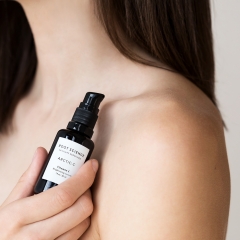
SKINCARE POWERED BY SCIENCE + NATURE
Nordic Antioxidants + Vitamin C, together in one serum.
Pillar 4: Cell Renewal With Retinol (or Bakuchiol)
If sun protection is the most important way to prevent damage, retinoids are the most studied way to help skin renew itself.
Retinol: the gold standard. Retinoids are a family of ingredients made from vitamin A. Prescription versions like tretinoin have been studied for decades, and retinol is the form you’ll most often find in over-the-counter skincare (Mukherjee et al., 2006). After retinol is absorbed, your skin converts it into its active form, retinoic acid. It then speeds up cell turnover, helps skin make more collagen and slows down collagen breakdown. In one 24-week study, older adults who applied retinol saw a clear improvement in fine wrinkles compared with those who used a plain lotion, along with measurable increases in new collagen (Kafi et al., 2007).
Retinol does come with trade-offs. It can cause dryness, redness, flaking and stinging, especially during the first few weeks. It breaks down in sunlight, which is why it’s used at night. And because freshly irritated skin burns more easily, dermatologists recommend extra sun care while you use it. Retinoids are also generally avoided during pregnancy, so check with your doctor if that applies to you.
Bakuchiol: the alternative when retinol isn’t the right fit. Bakuchiol is a plant compound that comes from the seeds of the babchi plant. Its structure is completely different from retinol, but it acts on many of the same genes in the skin (Chaudhuri & Bojanowski, 2014). In a 12-week study published in the British Journal of Dermatology, people who used bakuchiol saw improvements in wrinkles and discoloration that were comparable to people using retinol, and the retinol group reported more stinging and scaling (Dhaliwal et al., 2019).
Bakuchiol is a smart choice when:
• Retinol irritates your skin, even after starting slowly
• Your skin is sensitive or reactive
• You’re spending a lot of time in strong sun, like on a beach vacation, a ski trip or a summer spent outdoors, and you want to give retinol a rest
• You’d like a renewing ingredient you can also use in the morning, since bakuchiol is non-photosensitizing
You can also use both. Because bakuchiol is non-photosensitizing, it works well in the morning, which leaves retinol for the evening, when your skin isn’t exposed to the sun. Pairing them this way gives your skin renewal support around the clock. If your skin is sensitive, add one at a time and let your skin adjust before adding the other.
Whichever one you choose, start slowly. Using retinol or bakuchiol two or three nights a week at first, then adding more nights as your skin adjusts, makes it much easier to stick with. And neither one replaces sunscreen.
Pillar 5: Lifestyle Habits
What you do away from the bathroom mirror matters, too. These habits affect your whole body, and your skin shows the results.
Get enough sleep. Your skin does much of its repair work overnight. In one study, women who regularly slept poorly showed more signs of skin aging, and their skin recovered more slowly from sun exposure and barrier damage than the skin of women who slept well (Oyetakin-White et al., 2015).
Don’t smoke. After the sun, smoking is one of the clearest causes of early skin aging. When researchers compared pairs of identical twins in which only one twin smoked, the twin who smoked often had more sagging, deeper lines and puffier under-eye bags (Okada et al., 2013).
Eat for your skin. Food plays a supporting role as well. Your body can’t build collagen without vitamin C, and in a large study of American women, those who ate more vitamin C had fewer wrinkles and less dryness (Cosgrove et al., 2007). Some foods even add a small amount of sun defense from the inside. In a controlled trial, people who ate tomato paste rich in lycopene every day for 12 weeks had less redness and less collagen damage after UV exposure than people who didn’t (Rizwan et al., 2011). Similar small benefits have been seen with green tea and with cocoa that’s high in flavanols (Heinrich et al., 2006; Heinrich et al., 2011). This protection is real but modest, so think of it as a helpful bonus rather than a replacement for sunscreen. Our guide to the best foods for skin covers what to put on your plate.
A Simple Skin Longevity Routine
A skin longevity routine doesn’t need to be long. Doing a few things every day will do more for your skin than doing a lot of things once in a while. Here’s a simple routine built on the five pillars:
Step 1. Cleanse
Morning: A gentle cleanser, or just rinse with lukewarm water
Evening: A gentle cleanser to remove sunscreen and the day
Step 2. Treat
Morning: An antioxidant serum, such as vitamin C
Evening: Retinol, or bakuchiol if retinol isn’t the right fit (start 2 to 3 nights a week)
Step 3. Moisturize
Morning: A barrier-supporting moisturizer or face oil
Evening: A barrier-supporting moisturizer or face oil
Step 4. Protect
Morning: Broad-spectrum SPF 30 or higher, plus a hat, sunglasses and shade when you’re outside
Evening: Nothing extra. Overnight is when skin does much of its repair work
A few tips to make it work:
• Add one new product at a time and give it a couple of weeks before adding another, so you can tell how your skin is responding.
• Bakuchiol can be used in the morning or at night. If you use both, try bakuchiol in the morning and retinol at night.
• Be patient. Most changes take several weeks to a few months to show. Our skin results timeline explains what to expect along the way.
How Root Science Formulates for Skin Longevity
Root Science began with reactive skin in our own family. That experience still shapes how we formulate today: protect the skin barrier first, use ingredients that skin works well with and choose actives with real research behind them.
Our formulas are water-free and oil-based. Your skin’s barrier is built from lipids, so we build our formulas from skin-compatible oils, without fillers.
A few of our formulas line up with the pillars in this guide:
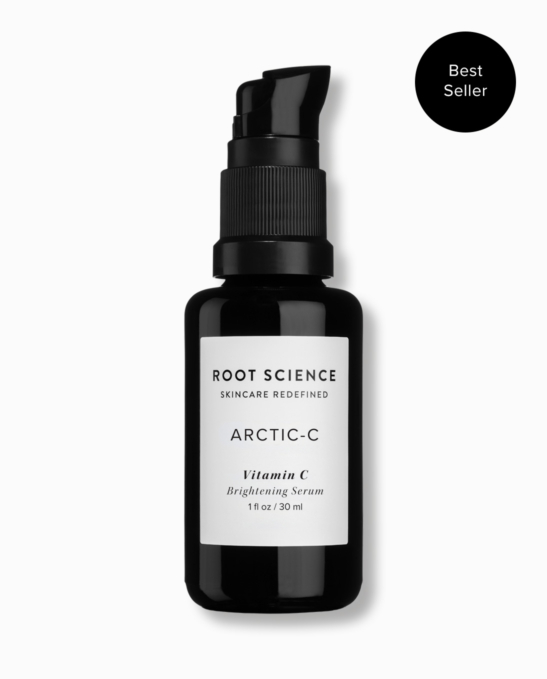
• Arctic-C is our stabilized vitamin C serum, made for morning use under your sunscreen.
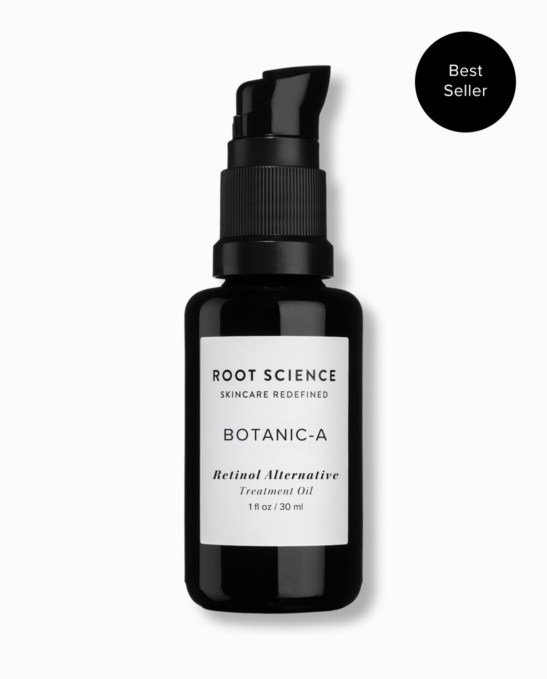
• Botanic-A is a 1% bakuchiol serum for when retinol isn’t the right fit, including sunny seasons and travel.
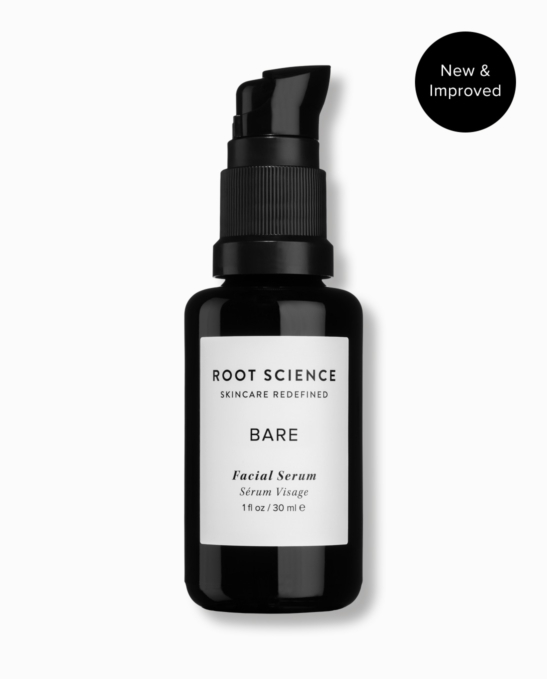
• Bare is our gentle face oil, made to support your skin barrier and help hold in moisture.
Not sure where to start? Our skin quiz can help you build a simple routine for your skin.
Frequently Asked Questions
What is the difference between skin longevity and anti-aging?
Anti-aging focuses on correcting visible signs like wrinkles and dark spots after they appear. Skin longevity focuses on keeping skin healthy and working well over the long term, mainly by preventing damage before it shows. It puts daily sun protection, a healthy skin barrier and well-studied ingredients ahead of quick fixes.
At what age should you start a skin longevity routine?
The best time to start is now, whatever your age. Daily sun protection helps at every stage of life, and research shows it can slow visible aging even in adults who start in middle age (Hughes et al., 2013). Ingredients like vitamin C and retinol can be added in your 20s, 30s or later, depending on your skin’s needs.
What is the most important step for skin longevity?
Protecting your skin from the sun. Sun exposure causes most of the visible signs of aging on the face, so daily sun protection does more than any other single step. That means protective clothing, shade, avoiding the strongest midday sun and wearing broad-spectrum SPF 30 or higher every day.
Is bakuchiol as effective as retinol?
In a 12-week study published in the British Journal of Dermatology, bakuchiol improved wrinkles and discoloration comparably to retinol, with less stinging and scaling (Dhaliwal et al., 2019). Retinol still has far more research behind it overall, so it remains the gold standard. Bakuchiol is a strong alternative when retinol isn’t tolerated or isn’t a good fit, such as during a sunny vacation.
Can you use vitamin C and retinol together?
Yes, most people can use both. The simplest approach is vitamin C in the morning under your sunscreen and retinol at night. Using them at different times of day helps keep irritation low and lets each one do its job. If your skin is sensitive, start with one and add the other once your skin has adjusted.
Can you reverse skin aging?
You can’t stop aging or fully reverse it, but you can improve how your skin looks and works. Retinoids have been shown to soften fine wrinkles and increase collagen (Kafi et al., 2007), and daily sun protection helps prevent new damage. Prevention and steady care over time make the biggest difference.
Is sunscreen enough on its own?
Sunscreen is essential, but it works best as part of a bigger plan. Protective clothing, hats, shade and avoiding the strongest midday sun add layers of defense that don’t wear off or depend on how much you apply. A healthy barrier, antioxidants, retinoids and good sleep build on that protection.
Does sugar age your skin?
Over time, it can. Extra sugar attaches to collagen and elastin through a process called glycation, which makes those fibers stiffer and harder for skin to repair. Enjoying sweets in moderation, wearing sunscreen daily and using antioxidant skincare all help limit the effect.
The Bottom Line on Skin Longevity
Skin longevity isn’t about chasing a younger face. It’s about giving your skin what it needs to stay healthy, comfortable and resilient for decades, starting with the simple habits that research supports most. Protect your skin from the sun every day, take care of your barrier, add a few well-studied ingredients and give them time to work. The habits you build now are the ones your skin will be living with 20 years from today.
Shop Featured Products
Disclaimer: This content is for informational and educational purposes only. It is not intended to provide medical advice or to take the place of such advice or treatment from a personal physician. All readers/viewers of this content are advised to consult their doctors or qualified health professionals regarding specific health questions. Neither Root Science nor the publisher of this content takes responsibility for possible health consequences of any person or persons reading or following the information in this educational content. All viewers of this content, especially those taking prescription or over-the-counter medications, should consult their physicians before beginning any skincare, nutrition, supplement or lifestyle program. The views and products expressed are not intended to treat, cure or prevent any disease.
Image Sources: Grayscale photo of woman via Inge Poelman
References:
Al-Niaimi F, Chiang NYZ. Topical vitamin C and the skin: mechanisms of action and clinical applications. J Clin Aesthet Dermatol. 2017;10(7):14-17.
Ananthapadmanabhan KP, Moore DJ, Subramanyan K, Misra M, Meyer F. Cleansing without compromise: the impact of cleansers on the skin barrier and the technology of mild cleansing. Dermatol Ther. 2004;17(Suppl 1):16-25.
Bissett DL, Miyamoto K, Sun P, Li J, Berge CA. Topical niacinamide reduces yellowing, wrinkling, red blotchiness, and hyperpigmented spots in aging facial skin. Int J Cosmet Sci. 2004;26(5):231-238.
Chaudhuri RK, Bojanowski K. Bakuchiol: a retinol-like functional compound revealed by gene expression profiling and clinically proven to have anti-aging effects. Int J Cosmet Sci. 2014;36(3):221-230.
Cosgrove MC, Franco OH, Granger SP, Murray PG, Mayes AE. Dietary nutrient intakes and skin-aging appearance among middle-aged American women. Am J Clin Nutr. 2007;86(4):1225-1231.
Danby SG, AlEnezi T, Sultan A, et al. Effect of olive and sunflower seed oil on the adult skin barrier: implications for neonatal skin care. Pediatr Dermatol. 2013;30(1):42-50.
Dhaliwal S, Rybak I, Ellis SR, et al. Prospective, randomized, double-blind assessment of topical bakuchiol and retinol for facial photoageing. Br J Dermatol. 2019;180(2):289-296.
Elmets CA, Singh D, Tubesing K, Matsui M, Katiyar S, Mukhtar H. Cutaneous photoprotection from ultraviolet injury by green tea polyphenols. J Am Acad Dermatol. 2001;44(3):425-432.
Fisher GJ, Kang S, Varani J, et al. Mechanisms of photoaging and chronological skin aging. Arch Dermatol. 2002;138(11):1462-1470.
Flament F, Bazin R, Laquieze S, Rubert V, Simonpietri E, Piot B. Effect of the sun on visible clinical signs of aging in Caucasian skin. Clin Cosmet Investig Dermatol. 2013;6:221-232.
Franceschi C, Bonafè M, Valensin S, et al. Inflamm-aging: an evolutionary perspective on immunosenescence. Ann N Y Acad Sci. 2000;908:244-254.
Ghadially R, Brown BE, Sequeira-Martin SM, Feingold KR, Elias PM. The aged epidermal permeability barrier. J Clin Invest. 1995;95(5):2281-2290.
Gordon JRS, Brieva JC. Unilateral dermatoheliosis. N Engl J Med. 2012;366(16):e25.
Grove GL, Kligman AM. Age-associated changes in human epidermal cell renewal. J Gerontol. 1983;38(2):137-142.
Heinrich U, Moore CE, De Spirt S, Tronnier H, Stahl W. Green tea polyphenols provide photoprotection, increase microcirculation, and modulate skin properties of women. J Nutr. 2011;141(6):1202-1208.
Heinrich U, Neukam K, Tronnier H, Sies H, Stahl W. Long-term ingestion of high flavanol cocoa provides photoprotection against UV-induced erythema and improves skin condition in women. J Nutr. 2006;136(6):1565-1569.
Hughes MCB, Williams GM, Baker P, Green AC. Sunscreen and prevention of skin aging: a randomized trial. Ann Intern Med. 2013;158(11):781-790.
Kafi R, Kwak HSR, Schumacher WE, et al. Improvement of naturally aged skin with vitamin A (retinol). Arch Dermatol. 2007;143(5):606-612.
Keen MA, Hassan I. Vitamin E in dermatology. Indian Dermatol Online J. 2016;7(4):311-315.
Krutmann J, Bouloc A, Sore G, Bernard BA, Passeron T. The skin aging exposome. J Dermatol Sci. 2017;85(3):152-161.
Lin FH, Lin JY, Gupta RD, et al. Ferulic acid stabilizes a solution of vitamins C and E and doubles its photoprotection of skin. J Invest Dermatol. 2005;125(4):826-832.
Lin TK, Zhong L, Santiago JL. Anti-inflammatory and skin barrier repair effects of topical application of some plant oils. Int J Mol Sci. 2017;19(1):70.
Linos E, Keiser E, Fu T, Colditz G, Chen S, Tang JY. Hat, shade, long sleeves, or sunscreen? Rethinking US sun protection messaging based on their relative effectiveness. Cancer Causes Control. 2011;22(7):1067-1071.
Mahmoud BH, Ruvolo E, Hexsel CL, et al. Impact of long-wavelength UVA and visible light on melanocompetent skin. J Invest Dermatol. 2010;130(8):2092-2097.
Man MQ, Feingold KR, Thornfeldt CR, Elias PM. Optimization of physiological lipid mixtures for barrier repair. J Invest Dermatol. 1996;106(5):1096-1101.
Mukherjee S, Date A, Patravale V, Korting HC, Roeder A, Weindl G. Retinoids in the treatment of skin aging: an overview of clinical efficacy and safety. Clin Interv Aging. 2006;1(4):327-348.
Okada HC, Alleyne B, Varghai K, Kinder K, Guyuron B. Facial changes caused by smoking: a comparison between smoking and nonsmoking identical twins. Plast Reconstr Surg. 2013;132(5):1085-1092.
Oyetakin-White P, Suggs A, Koo B, et al. Does poor sleep quality affect skin ageing? Clin Exp Dermatol. 2015;40(1):17-22.
Petersen B, Wulf HC. Application of sunscreen: theory and reality. Photodermatol Photoimmunol Photomed. 2014;30(2-3):96-101.
Rizwan M, Rodriguez-Blanco I, Harbottle A, et al. Tomato paste rich in lycopene protects against cutaneous photodamage in humans in vivo: a randomized controlled trial. Br J Dermatol. 2011;164(1):154-162.
Tanno O, Ota Y, Kitamura N, Katsube T, Inoue S. Nicotinamide increases biosynthesis of ceramides as well as other stratum corneum lipids to improve the epidermal permeability barrier. Br J Dermatol. 2000;143(3):524-531.
Shuster S, Black MM, McVitie E. The influence of age and sex on skin thickness, skin collagen and density. Br J Dermatol. 1975;93(6):639-643.
Danby 2010, Nutrition and aging skin: sugar and glycation
Nguyen & Katta 2015, Sugar Sag: Glycation and the Role of Diet in Aging Skin